Is HTTP Headers Safe? — Extension Safety Profile
Quick verdict: HTTP Headers earns a safety grade B, 65 out of 100, based on 5 of 5 dimensions.
65/100
Grade B · 5 of 5 checks
What we found
Automated safety profile from public signals (the extension's manifest & permissions, store listing, publisher, privacy policy). A full review hasn't been published yet.
What this safety grade means
HTTP Headers earns a safety grade of B (65/100), measured across 5 of 5 dimensions. Its strongest area is Community Reputation (83%). The weakest is Maintenance & Ownership (10%) — what holds its grade back the most.
On the public records we can check, HTTP Headers looks broadly trustworthy. 10,000 active users/installs reported on the store. Store rating 4.6/5 from 10 user ratings. Last updated on the store 2021-12-25. This is an automated profile, not a hands-on review — so treat the grade as a starting point: open HTTP Headers's own store listing and privacy policy before installing, and weigh it against the other browser extensions we track below.
Safety Signals
Based on 5 of 5 safety dimensions
| Dimension | Score | Bar | Source |
|---|---|---|---|
| Publisher & Identity | 60% · 4.8/8 pts | Automated signals | |
| Permissions & Access | 65% · 16.2/25 pts | Automated signals | |
| Data & Privacy | 83% · 13.2/16 pts | Automated signals | |
| Maintenance & Ownership | 10% · 0.8/7.5 pts | Automated signals | |
| Community Reputation | 83% · 8.3/10 pts | Automated signals |
In-depth safety analysis
This extension requests the "webRequest" permission along with host access to all HTTP and HTTPS websites. In practice, that combination allows it to read and modify every network request your browser makes, including the full URLs and any data sent or received. For a tool that displays HTTP headers, this level of access is technically necessary to inspect the traffic, but it is also extremely broad and sensitive.
General browser extensions in this category can pose risks if they are not kept up to date. A careful user should be aware that an abandoned or infrequently maintained extension with such powerful permissions could become a liability if browser APIs change or if security vulnerabilities are discovered over time. The fact sheet shows the extension was last updated in late 2021, which is worth noting.
The strongest dimension in the fact sheet is Community Reputation, reflecting a solid user rating and a reasonable number of users relative to the store listing. The weakest dimension is Maintenance & Ownership, which indicates a lack of recent updates and limited signals about the publisher's long-term commitment. This contrast between user satisfaction and ongoing upkeep is the key point for a user to weigh.
AI-assisted analysis of the documented signals above (permissions, store data, privacy practices) — explains what they mean and the risks typical for this category. Not a hands-on test.
What the store listing shows
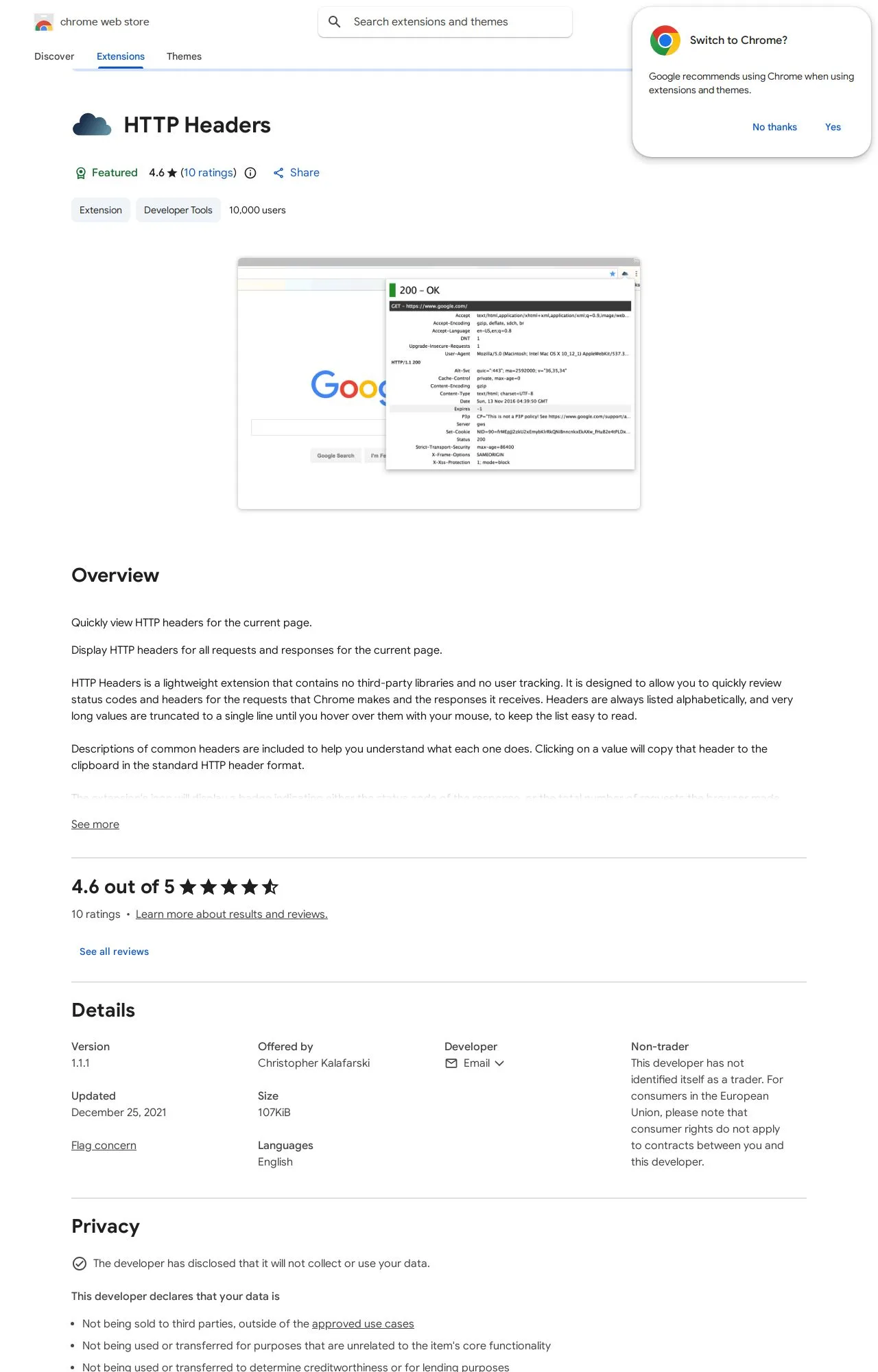
Who's Behind HTTP Headers?
- Publisher Christopher Kalafarski
Public records identify the publisher, but no individual founders or a separate registered company are named — which is what holds the Publisher & Identity score back. Less public information about who operates an extension means less you can verify about their long-term accountability.
How it compares
Among the 369 browser extensions we track, HTTP Headers scores higher on safety than 6% of them.
Computed from our own database of assessed browser extensions — updated as we track more.
Evidence on File (12)
HTTP Headers FAQ
- Is HTTP Headers safe?
- HTTP Headers earns a safety grade of B (65/100) on our evidence-based assessment, based on 5 of 5 safety dimensions we could verify from public records. This is an automated profile built from public records, not a hands-on review.
- Who is behind HTTP Headers?
- HTTP Headers is operated by Christopher Kalafarski.
Browse all browser extensions we've checked →