Is GNOME Shell integration Safe? — Extension Safety Profile
Quick verdict: GNOME Shell integration earns a safety grade B, 77.2 out of 100, based on 5 of 5 dimensions.
77.2/100
Grade B · 5 of 5 checks
What we found
Automated safety profile from public signals (the extension's manifest & permissions, store listing, publisher, privacy policy). A full review hasn't been published yet.
What this safety grade means
GNOME Shell integration earns a safety grade of B (77.2/100), measured across 5 of 5 dimensions. Its strongest area is Permissions & Access (85%). The weakest is Publisher & Identity (60%) — what holds its grade back the most.
On the public records we can check, GNOME Shell integration looks broadly trustworthy. 700,000 active users/installs reported on the store. Store rating 3.8/5 from 328 user ratings. Last updated on the store 2025-10-04. This is an automated profile, not a hands-on review — so treat the grade as a starting point: open GNOME Shell integration's own store listing and privacy policy before installing, and weigh it against the other browser extensions we track below.
Safety Signals
Based on 5 of 5 safety dimensions
| Dimension | Score | Bar | Source |
|---|---|---|---|
| Publisher & Identity | 60% · 4.8/8 pts 2 of 5 checks verified | Automated signals | |
| Permissions & Access | 85% · 21.2/25 pts 3 of 3 checks verified | Automated signals | |
| Data & Privacy | 83% · 13.2/16 pts 4 of 5 checks verified | Automated signals | |
| Maintenance & Ownership | 60% · 4.5/7.5 pts 1 of 2 checks verified | Automated signals | |
| Community Reputation | 76% · 7.6/10 pts 2 of 4 checks verified | Automated signals |
In-depth safety analysis
This extension uses the nativeMessaging permission to communicate with a companion application installed on your operating system. This allows the browser to detect and interact with your GNOME desktop environment, which is expected for a tool that manages shell extensions. The notifications permission lets it show system alerts about extension updates, and the storage permission is used to save your preferences locally.
For general browser extensions that integrate with a desktop environment, users should be aware that nativeMessaging can pass data between the browser and a separate program on your computer. A careful user would want to ensure they have installed the companion host application from the official GNOME source. While the extension is limited to two specific host domains, extensions in this category that lose publisher control could potentially be updated to communicate elsewhere.
The fact sheet shows this extension scores highest in the Permissions & Access dimension, reflecting its narrowly scoped host access and a reasonable set of permissions for its function. The weakest dimension is Publisher & Identity, which points to less available information about the publisher’s verification or organizational standing, a signal a cautious user might consider when installing software that interacts with the host system.
AI-assisted analysis of the documented signals above (permissions, store data, privacy practices) — explains what they mean and the risks typical for this category. Not a hands-on test.
What the store listing shows
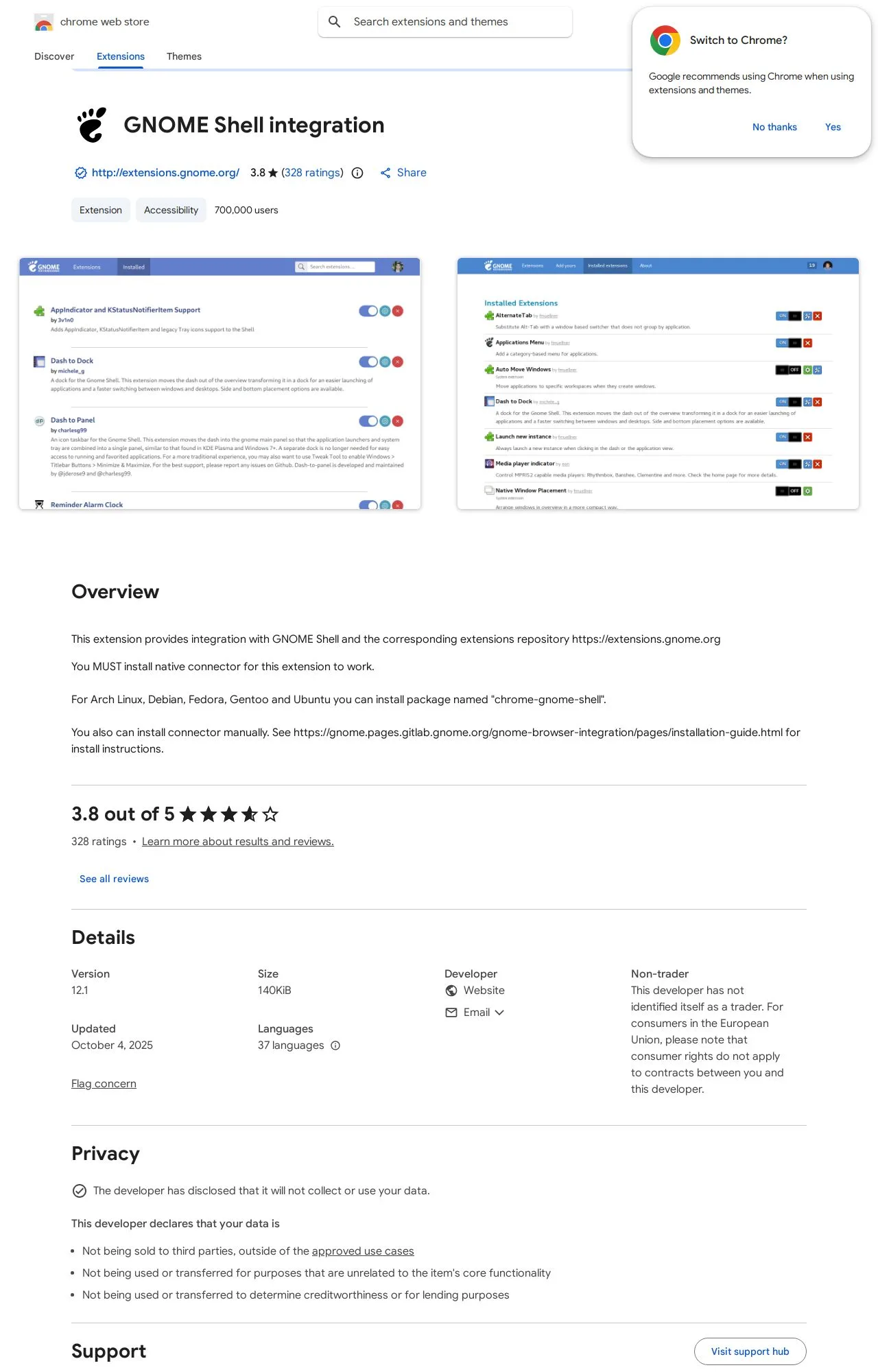
Who's Behind GNOME Shell integration?
- Publisher http://extensions.gnome.org/
Public records identify the publisher, but no individual founders or a separate registered company are named — which is what holds the Publisher & Identity score back. Less public information about who operates an extension means less you can verify about their long-term accountability.
How it compares
Among the 838 browser extensions we track, GNOME Shell integration scores higher on safety than 53% of them.
Computed from our own database of assessed browser extensions — updated as we track more.
Evidence on File (12)
GNOME Shell integration FAQ
- Is GNOME Shell integration safe?
- GNOME Shell integration earns a safety grade of B (77.2/100) on our evidence-based assessment, based on 5 of 5 safety dimensions we could verify from public records. This is an automated profile built from public records, not a hands-on review.
- Who is behind GNOME Shell integration?
- GNOME Shell integration is operated by http://extensions.gnome.org/.
Browse all browser extensions we've checked →